Top 10 Questions Expats Ask About Dutch Mortgages (Answered)
If you are searching for a clear expat mortgage FAQ, this guide answers the exact questions expats ask before buying a home in the Netherlands. Many internationals struggle to find reliable, up-to-date information that reflects real lender rules.
Because Dutch mortgages differ from other systems, confusion is common. Therefore, this article focuses on clarity, accuracy, and real scenarios.
Each question below reflects common expat mortgage questions seen daily by advisors. Answers are short, practical, and based on current Dutch lending policies.
Expat Mortgage FAQ: Can I Get a Mortgage With a Temporary Contract?
Yes, you can. A temporary contract does not block approval.
Dutch lenders focus on income stability, not just contract length. Therefore, expats with fixed-term contracts often qualify.
What Lenders Look At
Banks assess:
Remaining contract duration
Employer reputation
Income level and sector
In many cases, an employer intention statement helps. This document signals future employment likelihood.
When It Gets Easier
Permanent contracts increase lender choice. However, temporary contracts remain acceptable. As a result, early advice matters.
Learn more here: Understanding the impact of your job contract on mortgage options in the Netherlands.
Expat Mortgage FAQ: How Much Can I Borrow?
Borrowing capacity depends on income, interest rates, and personal situation.
Most lenders calculate affordability using gross income. Some also consider tax benefits like the 30% ruling.
Typical Borrowing Ranges
As a rough guide:
Single income: 4–5× gross salary
Dual income: higher combined capacity
However, exact numbers vary per lender. Therefore, generic calculators often mislead.
Why Personal Calculations Matter
Student loans, bonuses, and contract type all affect results. Personalized checks outperform online tools.
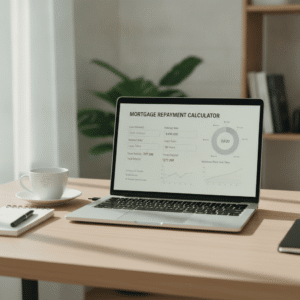
Use our free expat mortgage calculator to check how much you can borrow.
Common Expat Mortgage Questions About Residency Status
Do you need permanent residency? No.
Accepted Residency Types
Most lenders accept:
EU citizenship
Valid residence permit
Skilled migrant visas
Permanent residency helps but is not required. Therefore, early arrivals can still buy.
Why Banks Care
Lenders assess legal right to stay and work. Valid permits satisfy this requirement.
Dutch Mortgage Questions Expats Ask About Down Payments
A down payment is often misunderstood.
How Much Do You Need?
Dutch mortgages can finance up to 100% of property value. However, buyers still need cash for additional costs.
Typical costs include:
Transfer tax (2%)
Notary and registration
Valuation and advice fees
Plan for 4–6% of purchase price.
Expat Mortgage FAQ: What Extra Costs Should I Expect?
Buying costs surprise many expats.
One-Time Costs
You usually pay:
Transfer tax
Notary fees
Mortgage advice
These costs do not apply to renting.
Ongoing Costs
Homeowners pay maintenance and municipal taxes. Renters avoid these.
Understanding both sides builds trust and realistic expectations.
Common Expat Mortgage Questions About the 30% Ruling
The 30% ruling often boosts borrowing power.
How Lenders Treat It
Some lenders fully include it. Others apply discounts. Therefore, lender selection matters.
Duration Matters
Remaining ruling years affect calculations. Longer validity improves acceptance.
Read more in our 30% ruling mortgage guide.
Dutch Mortgage Questions Expats Ask About Renting Out
Can you rent out your home? Usually not without permission.
Mortgage Conditions
Most residential mortgages forbid renting without lender consent. Violations create serious risk.
Buy-to-Let Mortgages
Special mortgages exist for rentals. They require higher equity and rates.
Always clarify intent early.
Expat Mortgage FAQ: Can I Repay Early?
Yes, early repayment is allowed.
Standard Limits
Most lenders allow 10–20% annual repayment without penalty. Extra repayments may incur fees.
Why This Matters
Early repayment reduces interest costs. It also improves flexibility if income rises.
Common Expat Mortgage Questions About Selling Later
Selling is usually straightforward.
Market Liquidity
Dutch housing markets remain liquid, especially in cities. Therefore, resale risk stays limited.
Selling Before Mortgage Ends
Early sale is allowed. The mortgage closes upon transfer.
Dutch Mortgage Questions Expats Ask About Advice
Is independent advice necessary? For expats, yes.
Why Independence Matters
Banks only offer their own products. Independent advisors compare lenders.
At Expat Mortgage Platform, advice is:
Independent
Expat-focused
Free for the first consultation
Book a free, non-binding consultation.
FAQ Summary: Why This Expat Mortgage FAQ Matters
This expat mortgage FAQ answers real questions, not marketing claims. It reflects current lender behavior and expat realities.
Because buying abroad is stressful, clarity builds confidence.
Ready for Personal Answers?
General answers help. Personal advice works better.
Get your free expat mortgage consultation to ask your specific questions. Make decisions with confidence.