Buying a House in Amsterdam as an Expat: Budget, Competition, and Mortgage Reality
For people who look to buy a house in Amsterdam as expats, the real issue is not whether Amsterdam is attractive. The real issue is whether your budget, timing, and mortgage options fit the market that exists today.
We see the same pattern again and again. Many expats start with a dream area, a rough budget, and a long wish list. Then reality hits. Amsterdam is fast, expensive, and heavily apartment-based. It also comes with details that many international buyers do not expect, such as leasehold, VvE rules, and a gap between what looks affordable online and what is actually financeable in practice. That does not mean buying is impossible. It means you need a sharper plan from day one.
At Expat Mortgage Platform, we help you cut through that noise. We look at your income, contract type, savings, and goals first. Then we match that to the part of Amsterdam that is realistic for you. In many cases, that saves months of wasted viewings and weak bids. It also helps you decide sooner whether Amsterdam is still the right move or whether nearby areas offer a stronger result for your budget. For a first estimate, use our mortgage calculator. Then read our guide on buying a house in the Netherlands as an expat.
Amsterdam home buying for expats starts with budget reality
Amsterdam rewards prepared buyers. So, before you book viewings, you need to know your real ceiling. Not your hopeful budget. Not the number a portal suggests. Your real ceiling is the amount a lender is likely to approve, plus the savings you can bring for buyer’s costs, and plus any room you may need above valuation if you bid aggressively.
That matters because Dutch mortgages for owner-occupied homes are generally capped at 100% of the property’s market value. In plain English, that means you usually finance the home itself, but not the extra buying costs. Those costs can include notary fees, valuation costs, mortgage advice, and transfer tax if it applies to you. For owner-occupied homes, the Dutch transfer tax rate is 2% in 2026. Buyers aged 18 to 34 may qualify for the one-time starter exemption, but only if they meet the conditions and the home value does not exceed €555,000 in 2026. NHG is available in 2026 up to €470,000, or up to €498,200 if the extra amount is fully used for energy-saving measures.
Now add Amsterdam reality to that. The average transaction price for an existing owner-occupied home in Amsterdam was €631,000 in 2025, while the national average was €480,000. That does not mean every property costs that much. Still, it shows why many expats feel a budget mismatch early in the search. A budget that works in other Dutch cities may leave you with fewer options in Amsterdam, and often with smaller apartments rather than family houses. Therefore, the smartest first step is not browsing more listings. It is getting a sharp borrowing calculation and deciding where you are strong, where you are stretched, and where you are simply out of range. We can help with that through a free consultation.
Buying a house in Amsterdam: expat buyers rarely buy the “ideal” home first
A lot of expats picture a classic family house with outdoor space in a central district. In practice, Amsterdam is much more apartment-heavy than many buyers expect. Nationally, nearly 6 in 10 homes are owner-occupied. In Amsterdam, the pattern is different. Around 7 in 10 dwellings are rental properties, and only around 30% of the housing stock is owner-occupied. That already limits what comes to market for buyers. It also helps explain why competition can feel intense even when supply looks decent on paper.
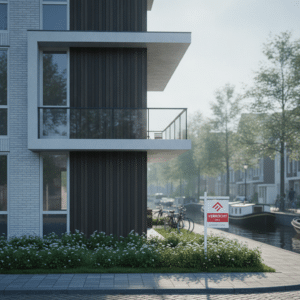
The property type matters too. In Amsterdam, many buyers purchase an apartment right rather than a standalone house. Kadaster explains that an apartment right gives you the exclusive right to use a specific part of a building. It also means shared ownership in the building structure and common areas. On top of that, apartment buyers usually become part of the homeowners’ association, known as the VvE. So you are not only buying square meters. You are also buying into rules, reserves, maintenance decisions, and monthly service costs.
That is why expats buying in Amsterdam often become a trade-off exercise. You may get location, but less space. Or more space, but outside the ring. Or a sharper price, but with higher monthly VvE costs or weaker energy performance. Because of that, we advise clients to rank their criteria early. Ask yourself what must stay and what can move. Is it commute time, outdoor space, number of bedrooms, energy label, or the ability to stay under a certain monthly payment? Once that is clear, your search becomes faster, and your bids become more credible. Also, before you bid, read our guide on costs for expats to buy a Dutch house, because apartment ownership often brings recurring costs that first-time buyers underestimate.
Expat buying in Amsterdam means understanding competition, speed, and bidding pressure
Amsterdam is not just expensive. It is also fast. Homes can attract strong interest quickly, and sellers do not always choose the highest number alone. Conditions matter. Timing matters. Financing certainty matters. In sealed-bid situations, clean terms can be just as important as the amount itself. We explain this in our own buying guide that in popular areas, the asking price often acts as a starting point rather than a final number. That point is even more relevant in Amsterdam than in many other markets.
So what does that mean in practice? First, you need your documents ready earlier. Second, you need a clear maximum that still feels safe to you. Third, you need to separate emotional bidding from strategic bidding. A home may look “within budget” online, but if similar homes in that area keep closing above expectation, the listing price alone tells you very little. That is where preparation beats hope.
There is also a legal side that expats should not ignore. In the Netherlands, a verbal agreement is not the binding finish line. The signed purchase agreement is what matters. After signing, buyers get a three-working-day cooling-off period. Sellers often ask for a 10% deposit or bank guarantee. Therefore, the process moves from exciting to serious very fast. If you are not prepared, the pressure can lead to bad decisions. If you are prepared, you can move quickly without losing control. That is one reason many expat buyers prefer to arrange their mortgage strategy before they fall in love with a property. To see what lenders may accept in your case, read our page on obtaining a Dutch mortgage as an expat.
Buying a house in Amsterdam: expat buyers must check leasehold before they bid
Leasehold is one of the biggest Amsterdam-specific issues. Many expats know the word. Far fewer understand the cost impact before they make an offer. In Amsterdam, a large share of properties stands on municipal ground lease. The city explains that when you buy a ground-lease property, the land remains owned by the municipality, and you pay a fee to use it. Kadaster also explains that erfpacht means you have the right to use land owned by another party, usually against an agreed fee set out in the deed.
This matters because two homes with similar size and location can feel very different financially once leasehold enters the picture. You need to know whether the ground rent has been paid off, fixed, switched to perpetual conditions, or whether future payments could still rise. You also need to know whether the listing price already reflects that burden. In other words, leasehold is not a side note. It is part of the asset.
Moreover, with apartments, leasehold and apartment rights can overlap with VvE obligations. That means your due diligence must go beyond the headline price. We tell clients to check four things early: the monthly housing payment, the VvE contribution, the leasehold position, and the building’s maintenance quality. If one of those is weak, the “cheap” apartment may stop being cheap very quickly.
When buying near Amsterdam is smarter than buying in Amsterdam itself
Sometimes the best Amsterdam strategy is not Amsterdam. That sounds counterintuitive, but it is often true. If your budget lands in the uncomfortable middle, you may spend months chasing marginal options in Amsterdam while nearby areas offer more space, better condition, lower monthly stress, or a higher chance of winning without stretching every variable.
This is especially relevant if your main goal is not a canal view but a stable long-term home. For some expats, that means looking at places such as Amstelveen, Diemen, Haarlem, Zaandam, Almere, Hoofddorp, or Utrecht, depending on commute, lifestyle, and budget. That does not mean Amsterdam loses its appeal. It means the question changes from “Can we buy in Amsterdam?” to “Where do we get the strongest outcome for our budget?” That is a better question.
There is another reason this matters. Amsterdam’s 2025 average transaction price sat at €631,000, while nearby municipalities can be lower or can offer different value per square meter depending on property type and transport links. Even when nearby areas are not cheap, they may offer a better fit between mortgage reality and daily living quality. Also, if your purchase price stays within the NHG range or within the starter exemption range where you qualify, your structure may become easier and cheaper. That is why we do not push clients toward one postcode. We push toward the strongest match between finances, property type, and life plan. Start with a free mortgage consultation, and we will help you see whether Amsterdam itself still makes sense or whether a nearby market deserves serious attention.
FAQ: buying a house in Amsterdam as an expat
Can an expat get a mortgage in Amsterdam?
Yes. Many expats can get a Dutch mortgage, even though acceptance depends on income, contract type, residency details, and the lender’s criteria. The first step is not choosing a property. The first step is checking what you can realistically borrow and under which conditions. We already explained that contract type and personal situation affect borrowing capacity and lender choice. Check our other pages and blogs to get a clear picture of everything that is needed when buying a home in the Netherlands.
Do I need a lot of savings to buy in Amsterdam?
Usually, yes, at least some. Dutch mortgages for owner-occupied homes generally cover up to 100% of the market value, not all buyers’ costs. So you often need savings for the notary, valuation, advice fees, and transfer tax if you do not qualify for an exemption. In competitive cases, you may also need extra room if your bid lands above valuation.
Is leasehold normal in Amsterdam?
Yes. The City of Amsterdam states that most properties in Amsterdam are built on land owned by the municipality under the ground lease system. That is why checking the leasehold deed and payment structure is essential before you bid.
Is buying in Amsterdam always better than buying nearby?
No. It depends on your budget, commute, and goals. If Amsterdam forces you into a weak compromise, nearby locations may offer better value, more space, or a less stressful buying process. The right move is the one that still feels sustainable after the keys are handed over.
Ready to see what is realistic for you?
If you are serious about buying a house in Amsterdam as an expat, do not start with more listings. Start with clarity.
We can help you:
- Calculate your realistic mortgage range
- Estimate your buyer’s costs
- Spot leasehold and apartment risks early
- Decide whether Amsterdam or a nearby area fits you better
- Move faster when the right home appears
Book your free consultation with Expat Mortgage Platform, and we will show you what is realistic, what is risky, and where your best opportunity actually is.