Sustainable Mortgage in the Netherlands: Why Applications Are Rising
A sustainable mortgage in the Netherlands is becoming more relevant for homeowners and expat buyers. Energy prices, geopolitical uncertainty, and stricter attention to energy labels are changing how people look at Dutch homes. This update follows a news report by NU.nl, which covered the sharp rise in mortgage applications for home improvement and sustainability measures. The underlying figures come from De Hypotheker, which reported that mortgage applications for improving a home rose by 59% in March compared with February 2026. That includes applications for renovation and energy-saving upgrades. For many homeowners, the reason is simple. Lower energy use can reduce monthly costs, improve comfort, and make the home less exposed to future energy price shocks. For expats, this matters even more. You may not yet know how Dutch homes perform in winter, how much poor insulation can affect your bills, or how an energy label can influence your mortgage options. Therefore, this is not only a homeowner story. It is also a buyer story. If you plan to buy in the Netherlands, sustainability now belongs in your mortgage strategy from the start.
Why a sustainable mortgage in the Netherlands is in the news
Mortgage demand for home improvement is rising because many Dutch homeowners want more control over their monthly costs. According to De Hypotheker, applications for home improvement rose by 59% in March 2026 compared with February. The same source links this rise to higher energy-price uncertainty and says many homeowners are taking action to lower energy use. This is not a one-month trend only. They also report that home improvement applications rose by 22% in 2024 and by 17% in 2025. So, the current rise fits a broader pattern. Since the energy crisis that followed the Russian invasion of Ukraine in 2022, many households have become more aware of their energy use. Now, renewed geopolitical tension adds fresh urgency. However, the housing market also plays a role. Because suitable homes remain hard to find, many owners prefer improving their current home instead of moving. They may use savings, home equity, or mortgage financing to fund insulation, solar panels, better glazing, or heating upgrades. As a result, a green mortgage in the Netherlands is no longer a niche topic. It is becoming part of normal financial planning for Dutch homeowners and buyers.
What changed in March 2026?
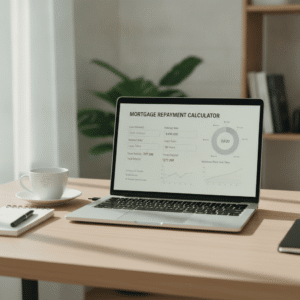
The March 2026 rise shows that homeowners respond quickly when energy uncertainty becomes visible again. In simple terms, people want lower bills and more stability. That does not mean every homeowner should immediately increase their mortgage. A higher loan can also mean higher monthly mortgage payments. Still, energy upgrades can reduce utility costs, improve daily comfort, and support long-term property value. That balance is why good advice matters. For expats, the first step is not choosing solar panels or insulation. The first step is checking what your mortgage allows. Dutch lenders look at income, property value, energy label, interest rates, and the planned measures. Therefore, your personal result can differ from a general news article. If you already own a home, you may be able to use equity for improvements. If you are buying, you may be able to include energy-saving measures in the mortgage setup. In both cases, the rules must fit your income and the property. You can start by checking your rough budget with our expat mortgage calculator. After that, a real assessment gives more certainty, especially when your income, contract type, nationality, or tax position requires extra explanation.
Why energy prices affect mortgage decisions
Energy prices affect mortgage decisions because a home is not only a purchase price. It is also a monthly cost structure. Many buyers focus on the mortgage payment first. However, heating, electricity, maintenance, taxes, insurance, and service charges also shape affordability. A poorly insulated home can look affordable on paper, yet feel expensive during winter. A better-performing home may cost more upfront, but it can reduce energy costs and improve comfort. That is why the energy label has become more important in Dutch mortgage planning. The official energy label shows how energy efficient a home is and what improvements may still be possible. RVO explains that labels range from G as the weakest to A++++ as the strongest. It also states that the label looks at the energy performance of the home itself, not at how the resident uses appliances. You can read more about official labels via RVO. For expats, this helps during viewings. Ask for the label. Ask which upgrades are already done. Then ask what still needs investment. That gives you a clearer view of the real cost of living in the property.
How extra borrowing for energy upgrades works
A sustainable mortgage in the Netherlands can work in different ways. First, a buyer may be able to borrow more when buying a home with a strong energy label. Second, a buyer or homeowner may be able to borrow extra for approved energy-saving measures. The official 2026 table from Volkshuisvesting Nederland shows that the extra amount depends on the property’s energy label. For buying a home, the additional amount compared with an E, F, or G label ranges from €5,000 for label C or D to €40,000 for A++++ with a qualifying long-term energy performance guarantee. Regarding energy-saving measures, the extra amount can be €20,000 for labels E, F, and G, €15,000 for C and D, and €10,000 for A, B, A+, and A++. For A+++ and A++++ homes, the 2026 table shows €0 extra for additional energy-saving measures. This makes sense because very efficient homes often have fewer useful upgrades left. However, rules and lender policies can differ in practice. Therefore, you should not rely only on a general table. We can check how the rule applies to your situation.
Sustainable mortgage in the Netherlands: two routes
There are two common routes. The first route is buying a less efficient home and financing improvements. This can work well if the home has potential, the asking price leaves room for investment, and the planned upgrades are realistic. For example, a home with label E, F, or G may allow extra borrowing for energy-saving measures under the 2026 rules. However, you must still qualify based on income and property value. The second route is buying an already efficient home. This can reduce renovation stress and may support higher borrowing power through the energy label. Still, a better label usually also affects the price. Many buyers value lower bills and lower maintenance risk. So, you may face stronger competition for efficient homes. That is why we advise expats to compare the full picture. Look at the purchase price, expected energy costs, renovation budget, mortgage options, and timing. You can also read our guide on energy labels and extra borrowing power for more background. In short, an energy-saving mortgage in the Netherlands is not only about borrowing more. It is about buying smarter.
Route 1: Finance improvements
Financing improvements can be attractive when the property has a weak label but strong potential. For example, insulation, HR++ glass, solar panels, ventilation upgrades, or a heat pump can improve comfort and reduce energy use. Milieu Centraal explains that Dutch mortgage rules can allow extra borrowing for energy-saving measures, while the final room depends on income, property value, and the energy label. It also notes that a mortgage can sometimes be a practical way to spread the cost over a longer term. You can read its explanation here: extra mortgage room for energy-saving measures. However, this route needs discipline. Do not treat extra borrowing as free money. The work must be planned, priced, and accepted by the lender. Also, contractors, permits, and delivery times can affect the timeline. For expats, that can be stressful if you do not know Dutch suppliers yet. Therefore, we prefer to check the mortgage structure early. That way, you know whether the renovation route is realistic before you bid.
Route 2: Buy an efficient property
Buying an efficient property can be easier if you want lower renovation risk. Many new-build homes, recently renovated homes, and well-insulated apartments already have a stronger starting point. That can reduce the chance of surprise costs after completion. It may also support borrowing capacity, depending on the label and lender assessment. However, this route has trade-offs. Efficient homes may cost more. New-build homes may involve waiting time, finishing costs, and delivery checks. Existing efficient homes may attract more buyers. So, the best choice is not always the home with the best label. The best choice is the home that fits your budget, timeline, and risk level. Our guide on new build vs existing homes in the Netherlands explains this trade-off in more detail. If you need to move quickly, an existing home may still be the right choice. If you want fewer early technical surprises, a newer or upgraded property may suit you better.
What expats should check before buying
Expats should check the energy label before making a bid. The Dutch government states that an energy label is required for most homes when they are sold, rented, or delivered. RVO also explains that sellers must provide a registered, final energy label and mention the label class in property advertisements. This matters because the label gives more than a green letter. It gives a first signal about insulation, heating, and improvement potential. However, do not stop there. Ask for recent utility costs, renovation invoices, VvE documents if you buy an apartment, and any available technical inspection reports. Also, check whether the home has single glass, old frames, poor roof insulation, outdated heating, or ventilation issues. These details can change your budget fast. If you are new to the Netherlands, this is easy to underestimate. Dutch homes can differ a lot by age, city, construction type, and maintenance history. That is why we look at mortgage approval and ownership costs together. Our step-by-step guide to buying a house in the Netherlands can help you understand the full process before you start viewing homes.
Energy label and sustainable mortgage choices
The energy label should guide your mortgage choices, but it should not make the decision for you. A label A home can still have high service charges, a label D home can still be a smart buy if the price is fair and improvements are affordable, and a label G home can become risky if the work is expensive, urgent, or hard to finance. Therefore, you need a complete cost view. Start with the purchase price. Then add buyer costs, mortgage advice, valuation, notary fees, tax, technical inspection, renovation costs, and expected monthly ownership costs. If you want a structured overview, read our guide to the costs of buying a house in the Netherlands for expats. After that, compare the home’s current label with its improvement potential. A sustainable mortgage in the Netherlands can support a stronger plan, but only when the numbers work. We can help you compare lenders, check whether extra borrowing applies, and show what the monthly impact may be. That is especially useful when your employment contract, foreign income, 30% ruling status, or residence situation affects lender acceptance.
Should you renovate or buy an efficient home?
The right answer depends on your goal. Renovating can create value when you buy the right property at the right price. It can also let you shape the home around your needs. However, it adds project risk. You need reliable quotes, time, and sometimes permits. In an apartment, you may also need VvE approval. Buying an efficient home can reduce that hassle. It may also make your monthly costs easier to estimate. Yet the purchase price may already reflect the better label. So, you should not compare homes only by energy rating. Compare the total first-year cost and the expected cost over five to ten years. Also, look at your personal situation. Are you staying in the Netherlands long term? Do you want to start a family? Do you need a fast transfer date? Are you comfortable managing Dutch contractors? These questions matter. A green mortgage in the Netherlands can help with the financial side, but it does not remove practical work. The smartest plan combines mortgage advice, technical checks, and a clear view of future costs. That is how you avoid buying a “cheap” home that becomes expensive later.
Green mortgage in the Netherlands and monthly costs
Monthly costs decide whether a home feels comfortable after completion. A lower purchase price can be attractive, but weak insulation can raise energy bills. On the other hand, a more efficient home can cost more upfront, yet reduce energy stress over time. This is why lenders and policymakers now pay more attention to energy performance. The logic is simple. If a home uses less energy, the household may have more room in its monthly budget. Still, every case needs careful review. Interest rates, repayment type, tax position, income, and renovation costs all affect the final result. Also, energy use depends partly on behaviour. A label helps, but it does not predict your exact bill. Therefore, we advise expats to ask for real usage data where possible. Ask the seller for recent bills. Check the size of the home. Look at the heating type. Then combine that with your mortgage estimate. If the home needs work, ask whether the lender accepts the planned measures. A sustainable mortgage in the Netherlands works best when the buying plan, energy plan, and income check all point in the same direction.
Practical steps for expat buyers
Start early. Before viewings, check your maximum mortgage and ask how energy labels may affect your options. Then, during each viewing, collect energy information. Ask for the official label. Look at the windows, roof, walls, heating system, ventilation, and maintenance history. If the home looks interesting, estimate the cost of improvements before bidding. This is important because a winning bid can move quickly in the Netherlands. You may only have a short time to arrange financing, inspections, and contract checks. Therefore, preparation gives you more control. It also helps you avoid emotional decisions. A home can look beautiful, yet require expensive upgrades. Another home can look less perfect, yet offer a better long-term financial outcome. Use internal resources to build your baseline. Start with the expat mortgage calculator, read our FAQ about mortgages for expats, and compare your housing route with our new-build versus existing-home guide. Then book a free consultation if you want a lender-specific review. That way, you know whether your sustainable home plan is realistic before you commit.
Start with the sustainable mortgage calculation
A sustainable mortgage calculation should answer three questions. First, how much can you borrow based on your income? Second, how does the property’s energy label affect your borrowing power? Third, can you finance planned energy-saving measures inside the mortgage? These questions sound simple, but expat cases can be more complex. Some lenders treat temporary contracts differently. Some look more carefully at foreign income. Others may have specific rules for the 30% ruling, probation periods, self-employment, or non-euro income. Because of that, an online estimate is only a first step. It can show direction, but it cannot replace advice. We help expats compare lenders and structure the application clearly. We also explain what documents you need and where risks may appear. If you have already found a property, we can check the numbers around that specific home. If you are still searching, we can help you set a realistic budget range. That makes your search sharper. It also helps you move faster when the right home appears. So, before you bid, check your sustainable mortgage in the Netherlands with someone who understands expat lending.
FAQ about sustainable mortgages in the Netherlands
Can expats get a sustainable mortgage in the Netherlands?
Yes, expats can often use the same sustainability-related mortgage rules as Dutch buyers, as long as they meet lender requirements. The main question is not whether you are an expat. The main question is whether your income, residence status, employment contract, property value, and planned measures fit the lender’s rules. Some expats qualify easily. Others need more preparation because their income comes from abroad, their contract is temporary, or their situation includes the 30% ruling. Therefore, it is smart to check your case early. A sustainable mortgage in the Netherlands may help you buy an energy-efficient home or finance approved energy-saving measures. However, the exact result depends on the home and the lender. We can compare your options and explain which route is realistic.
Does a better energy label always mean I can borrow more?
A better energy label can increase borrowing power, but it does not guarantee approval. Your income still matters. The property value still matters. The lender must also accept the application. Under the 2026 rules, homes with stronger labels can allow extra borrowing for the purchase compared with homes with E, F, or G labels. However, the additional room differs by label. Also, for very efficient homes, extra borrowing for additional energy-saving measures may be limited or unavailable. That is because fewer useful improvements may remain. So, treat the energy label as one part of the mortgage calculation, not the whole answer. We can check the effect of the label on your real borrowing power.
Can I borrow extra to make a Dutch home more energy efficient?
In many cases, yes. Dutch rules can allow extra borrowing for approved energy-saving measures. The amount depends on the energy label, income, and property value. For example, the official 2026 table gives more room for homes with weaker labels when the money goes toward sustainability improvements. This can help buyers improve insulation, glass, heating, ventilation, or solar performance. However, you need a clear plan. Lenders may ask for quotes, specifications, or proof that the money goes to accepted measures. Also, the extra mortgage still creates repayment obligations. So, you should compare the higher mortgage payment with the likely energy savings and comfort improvement. That is where advice helps.
Is this news only relevant for homeowners?
No. It is also relevant for expat buyers. Homeowners may use mortgage financing to improve their current home. Buyers can use the same trend to make smarter choices during the search. If many people now prefer improving instead of moving, that can also affect housing supply. At the same time, efficient homes may attract more attention because they offer lower expected energy costs. So, expat buyers should not ignore sustainability. It can affect the price, monthly costs, borrowing power, and long-term value of the home. If you are comparing properties, energy performance should be part of your decision from the first viewing.
Ready to check your options?
Energy uncertainty makes one thing clear: your mortgage should fit more than the purchase price. It should also fit your monthly costs, your energy risk, and your long-term plans in the Netherlands. At Expat Mortgage Platform, we help expats understand what they can borrow, how energy labels affect the calculation, and whether financing sustainability measures makes sense.
Start with our expat mortgage calculator or book a free consultation with our team. We will help you compare your options, avoid surprises, and move forward with confidence.